Climate Change

The ecological impacts

Browsing Posts published by admin

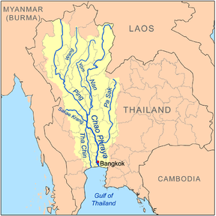
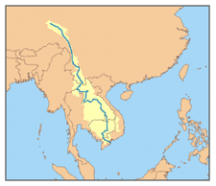
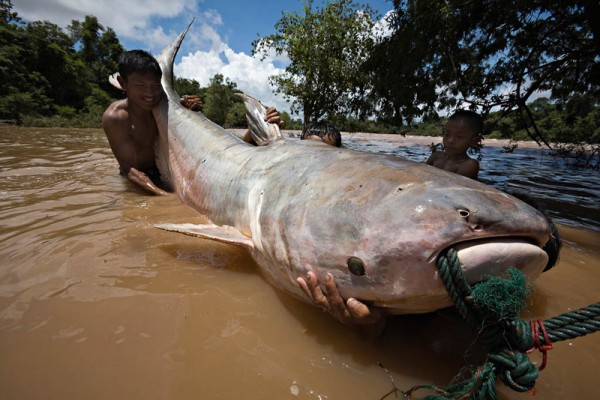
Name: Pangasuis sanitwongsei (giant catfish)

Status: Critically endangered

Range: The Choa Phraya and Mekong basins in Cambodia, China, Lao, PDR (people’s democratic republic) Thailand, and Viet Nam

Habitat & Ecology: The giant catfish is a benthic freshwater fish that is potamodromous and inhabits large rivers surrounded by rainforest. The giant catfish uses deep pools in the dry season as refuges. This species of fish migrates and spawns just before the rainy season. Pangasuis sanitwongsei can reach 300cm (10 feet) in length and get up to 293kg (646 pounds). There are two sub populations separated by the Khone falls; with both populations in decline and having an estimated generation time of 10-15 years.

Potential Climatic effect: change of flow of the river and its tributaries could effect the migration of the spawning fish. The timing of the rainy season shifting form climate change could also affect the migration and spawning of the giant catfish.

General Facts

Conservational Status:  Vulnerable

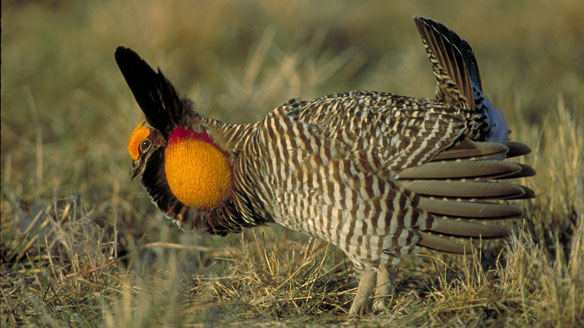
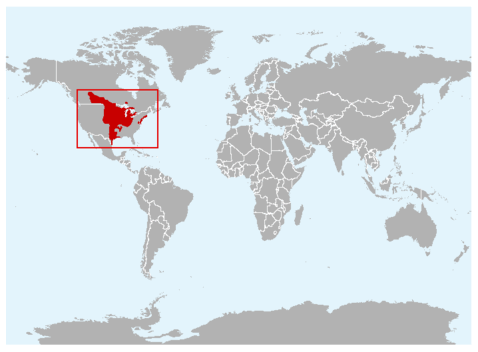
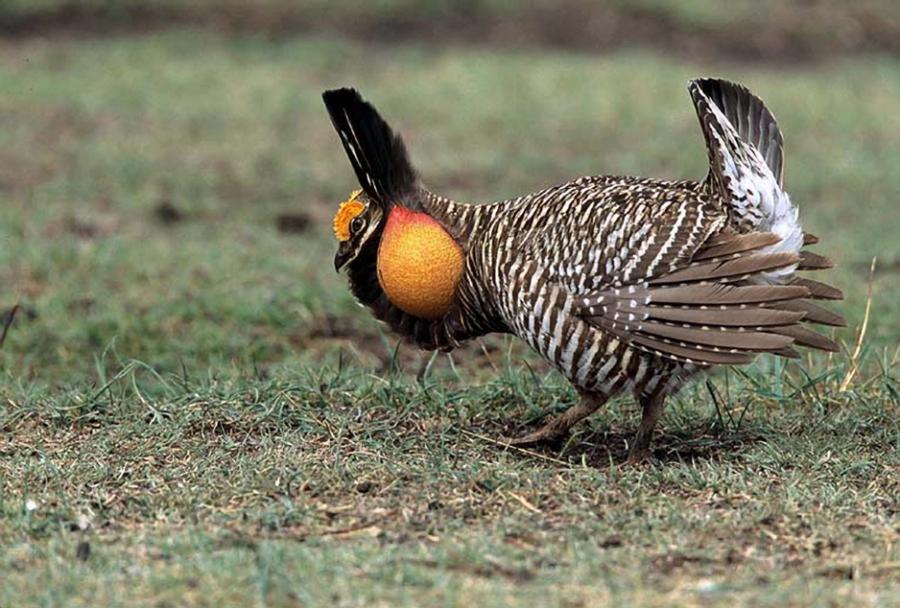
Scientific Name: Tympanuchus cupido

Size: Range: Found primarily in central North America; regionally extinct from Canada.

Habitat:  Includes native prairie grasslands with a combination of woodland areas.  Because native habitat is being converted to agricultural lands the species is adapting to native grasslands surrounded by agricultural crops.

Ecology:  The population is in major decline due to a significant reduction in habitat.  This species is not directly affected by global warming but human are altering their natural grassland habitat for an agricultural one.  A second reason for the reduction of habitat is from grazing competition from other animals.  The third reason for a population decline in these birds is due to the fact that hunting is still legal in some of the states in the U.S.

Evolution: Isolated populations of the Prairie Chicken have lead to a decrease in genetic diversity; this decrease has lead to a reduction in fertility and overall fitness of the birds.  These birds require the native grasslands for breeding and reproduction.  Without the native grasslands, this species will continue to decline.

Quiz

No comments

References

No comments

Alan Pounds, Jay Savage, Federico Bolaños 2008. Incilius periglenes. In: IUCN 2009. IUCN Red List of Threatened Species. Version 2009.2. <www.iucnredlist.org>. Downloaded on 03 February 2010.

BBC News. (1999). Climate Claims the Golden Toad. Retrieved from http://news.bbc.co.uk/2/hi/science/nature/328776.stm

BirdLife International 2008. Tympanuchus cupido. In: IUCN 2009. IUCN Red List of Threatened Species. Version 2009.2. www.iucnredlist.org. Downloaded on 08 February 2010.

CBC News. (2009). Prairie-chicken wiped out in Canada.  Retrieved from www.pixdaus.com/?sort=tag&tag=danger

Christopher D. G. Harley,1,2*, A. Randall Hughes,3 Kristin M., Hultgren,3 Benjamin G. Miner,1, Cascade J. B. Sorte,1 Carol S., Thornber,3,4 Laura F. Rodriguez,3, Lars Tomanek3,5  and Susan L. Williams1, 2006, The impacts of climate change in coastal marinesystems Ecology Letters, 9: 228–241

Derocher, A.E., D. Andriashek and I. Sterling. 1993. Terrestrial foraging by Polar bears during the ice-free period in western Hudson Bay. Arctic 46: 251-254.

Dowsley, M. and G. Wenzel. 2008. “The time of the most Polar bears”: a co-management conflict in Nunavut. Arctic 61: 177-189.

Fischbach, A.S., S.C. Amstrup and D.C. Douglas. 2007. Landward and eastward shift of Alaskan Polar bears dennin associated with recent sea ice changes. Polar Biology 30. 1395-1405.

Global Shift. (2009). Consider the Polar Bear.  Retrieved from http://www.globalshift.org/2010/01/consider-the-polar-bear/

Graeme C. Hays1, Anthony J. Richardson2,3,4 and Carol Robinson5, 2005, Climate change and marine plankton, Ecology and Evolution Vol.20 No.6 Martin Edwards & Anthony J. Richardson, 2004, Impact of climate change on marine pelagic phenology and trophic mismatch, NATURE, Vol 430

Jenkins, A., Kullander, F.F. & Tan, H.H. 2007. Pangasius sanitwongsei. In: IUCN 2009. IUCN Red List of Threatened Species. Version 2009.2. <www.iucnredlist.org>. Downloaded on 07 February 2010.

Krisanavarin, Suthep. Retrived from www.lightstalkers.org/images/show/418201

Mech, L.D. & L. Boitani. 2008. Canis lupus. In: IUCN 2009. IUCN Red List of Threatened Species. Version 2009.2. <www.iucnredlist.org>. Downloaded on 06 February 2010.

Post, E., R.O. Peterson, N.C. Stenseth & B.E. McLaren. 1999. Ecosystem consequences of wolf behavioural response to climate. Nature 401. 905-907.

Schliebe, S., Wiig, Ø., Derocher, A. & Lunn, N. 2008. Ursus maritimus. In: IUCN 2009. IUCN Red List of Threatened Species. Version 2009.2. <www.iucnredlist.org>. Downloaded on 05 February 2010.

Species at Risk Public Registry. (2009). Species Profile. Retrieved from http://www.sararegistry.gc.ca/species/speciesDetails_e.cfm?sid=35#photo

Sterling, A. and A.E. Derocher. 1993. Possible impacts of climate warming on Polar bears. Arctic 46: 240-245.

Sterling, I., E. Richardson, G.W. Thiemann and A.E. Derocher. 2008. Unusual predation attempts of Polar bears on Ringed seals in the southern Beaufort sea: possible significance of changing spring ice conditions. Arctic 61: 14-22.

Wilmers, C.C. & W.M. Getz. 2005. Gray wolves as climate change buffers in Yellowstone. PLoS Biology 3. 571-576.

Withgott, Jay. &  Brennan, Scott. (2009). Essential Environment. San Francisco: Pearson Education.
The Wolf

No comments

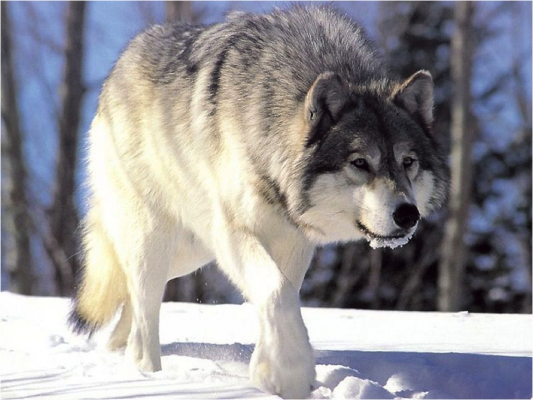
Common Name:  Grey wolf, Timber wolf, Mexican wolf, wolf, Arctic wolf, Tundra wolf

Scientific Name: Canis lupus

IUCN classification: least concern

Size:

Height: 61-94 cm

Length: 131-201 cm

Weight: 25-86 kg (55-190 lbs)

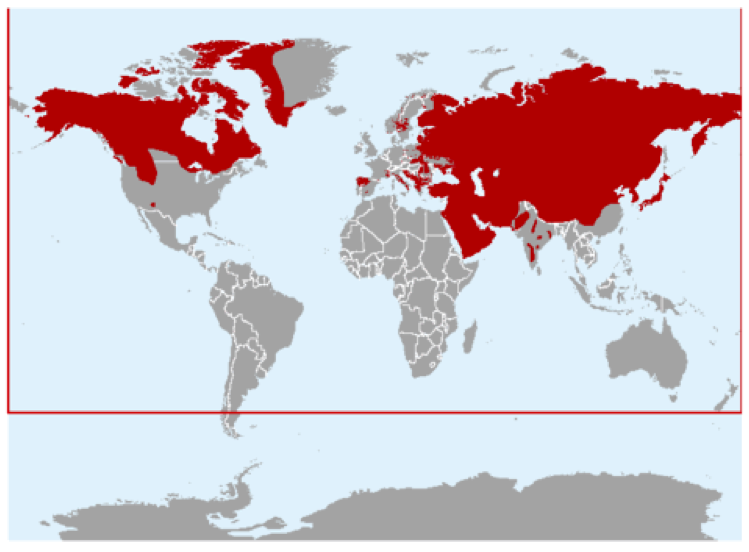
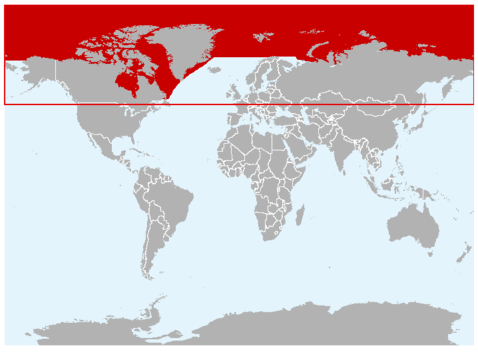
Range: Canada, Alaska, northern United States, Europe, Asia between 75oN and 12oN

General Information:

The grey wolf lives in remote forest habitats in packs varying in number of individuals. These packs are often made up of a family unit with males leaving the pack near sexual maturity. Only the alpha or dominant male and female of each pack reproduces and all members of the pack help to look after the young. The pack hunts cooperatively, allowing them to take down larger prey than they would as individuals (Mech & Boitani 2008).

Habitat:

The grey wolf was once the worlds’ most widely distributed mammal, until over hunting and habitat destruction pushed their populations out of much of their southern range. Currently the grey wolf is found in remote, forested regions with pack sizes and population sizes varying with region.

Climate Change:

With wolves being so versatile in habitat and prey type it leaves the question of how they will be affected by climate change. Wolves have proven that in regions with greater snow fall pack sizes will increase during the winter months, making the pack more efficient hunters. In the case of global warming, limitations on the amount of snow pack during the winter months will cause these packs to remain at smaller sizes. This variation will show drastically different effects on the ecosystem and the trophic food chain within the wolf’s habitat (Post et al. 1999). In the southern populations limited to no snowfall will cause the abundance of prey organisms to increase. This will have varying affects on the vegetative ecosystem of the area.

One example of this is with the Isle Royal population, which has been well studied for many generations. These wolves prey upon mainly moose in the winter months and with increase in snowfall there is a tripling in the rate of moose take-down. This stops the moose from eating the vegetation and therefore the vegetation in the area benefits. With wolf packs remaining small the moose population will increase and the vegetation will show a decrease due to over browsing (Post et al. 1999).

Another similar impact of wolf populations on ecosystems undergoing climate change has been studied in Yellowstone National Park. There the extirpation and reintroduction of wolves has given scientists the ability to view the impact of the wolf population on the ecosystem. With wolves as one of the top predators in Yellowstone they cause effects on the entire trophic cascade. It is believed that wolves act as a buffer to climate change through their contribution of carcasses and population control. For lower level predators and scavengers winter without wolves meant little to no food was available but with wolves they can survive. In the reintroduction of wolves to the Park, balance has been seen between predators, scavengers and prey. This balance will allow these organisms to feel the effects of climate change to a lesser degree (Wilmers & Getz 2005).

The Wolverine

No comments

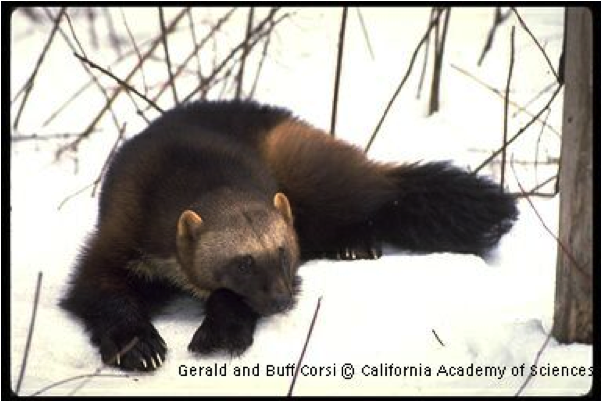
Common Name: North American/ European/Vancouver Island Wolverine

Scientific Name: Gulo gulo sp.

Gulo gulo luscus (North American)

Gulo gulo gulo (European)

Gulo gulo vancouverensis (a possible Vancouver Island sub-species)

IUCN classification: Near Threatened

Size:

Height: 36-45 cm

Length: 65-105 cm

Tail: 13-26 cm

Weight: 9-30 kg (20-66 lbs)

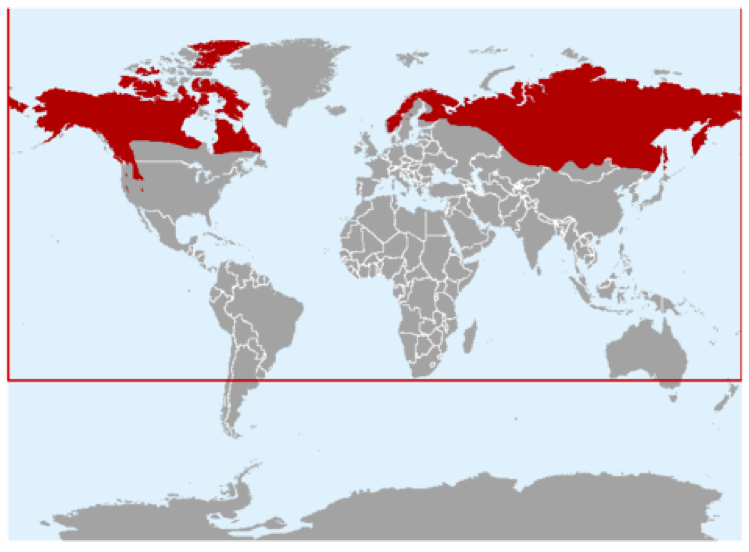
Range: Northern Europe, Asia, North America (boreal zone)

General Information:

Wolverines are known as solitary, aggressive and territorial animals and are one of the largest members of the mustelidae or weasel family, which includes skunks, martins, and ferrets. They are also known for great courage, with individuals known to chase bear, cougar, and wolves from carcasses. Their ability to travel long distances and maintain high rate of speed for approximately 10 miles (16 km), explains why home ranges are so large. With the wolverines range being mainly in the high northern hemisphere these usually nocturnal animals will often experience 24 hour day or night. During these periods their time is spent with four hours of rest followed by four hours of activity (Patsy et al. 2009).

Wolverines are commonly known as scavengers of the kills of other predators such as wolves, cougar, or lynx. Much of their usual hunting prey consists of wild sheep and small mammals, including rodents and lagomorphs. In the winter season Wolverines have been known to hunt larger prey such as deer and moose due to the inability of the prey to maneuver well in deep snow (Abramov 2009).

The mating season of the wolverine is during the summer months, but unusual in this process is the 6-7 month period between insemination and implantation. Implantation occurs in the winter months and kits are born between February and April depending on region. Authorities in this area have not come to a solid conclusion as to the birthing time of the wolverine but kits emerge from under snow dens in April and May (Rausch 1972). Wolverines become sexual mature at approximately 2.5 years old (Whitman 1999).

Habitat:

Wolverines live mainly in boreal forests in the northern hemisphere with their range spreading south through western North America through to California. Historic ranges covered much more of the southern regions of Europe, Russia, and North America. Due to hunting and population fragmentation, as well as habitat destruction they have been limited to more remote regions (Abramov 2009).

Wolverines are territorial with females maintaining smaller ranges than males, territories vary between 100 km2 and 600 km2 (Whitman 1999). Density of these animals ranges between 1 per 500 km2 in northerly regions and 1 per 65 km2 in southern regions within the United States (Abramov 2009).

Climate Change:

The Wolverine has a deep connection with the snow causing it to be one to the organisms which will show the effects of climate change. This connection is seen through its scavenging of carcasses which are more easily stored in the cold of winter, as well as in its increase ability to catch and take down prey items in the snow (Abramov 2009). As the snow line creeps higher up the mountains and further north wolverines will be left limited in their hunting ability as well as their scavenging ability. Scavenged carcasses in a warmer climate will decompose at a higher rate decreasing the availability of scavenged food. Also the ability of the wolverine to hunt large prey will become non-existent.

Due to high population fragmentation within the southern ranges and the locality these populations will be the hardest and first hit by climate change with the potential extirpation of these species from these southern regions. The wolverine has already undergone massive habitat destruction and fragmentation and with the impending climate change will surely show massive decrease in range over the next century.

The Ocean

No comments

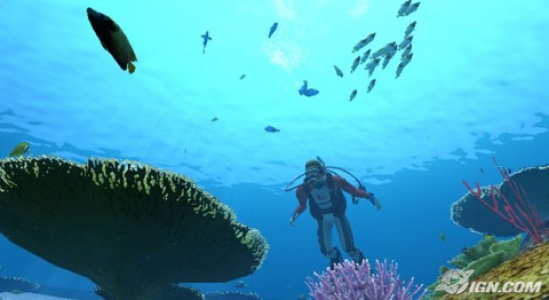
71% of the earth’s surface is occupied by oceans/seas and these oceans and seas are a major component of the carbon cycle and therefore effect climate change. Climate affects ocean mixing, stratification, light levels, and nutrient cycling. Plankton phenology (annual life cycle events) is a sensitive indicator of climate change and is affected in ways such as range shifts, timing, numbers, and subsequent effects on other trophic levels (bottom up interaction). There is a significant correlation between sea surface temperatures and seasonal summer cycles of plankton. There is also a correlation between plankton and water column stratification changes, which can be brought on by climate change.  The intensity of the affects felt by plankton and other subsequent trophic levels (bottom up) differ between the different plankton assemblages.

Krill have decreased ten fold over the last 25 years, (major food for whales and other mammals) due to a decrease in summer phytoplankton blooms and winter ice algae. Range shifts of copepods in warm water assemblages have moved 100km to the north while the cold water assemblages have experienced retractions in range. North Sea phytoplankton blooms have advanced in their timing by weeks compared to their grazers the zooplankton in response to great sea surface temperatures. This disruption of timing has a potential to have a sever impacts on the other trophic levels, (bottom up) and with a mismatch between trophic levels the success of the whole system decreases.


The Golden Toad

1 comment

General Facts

Conservational Status: Extinct

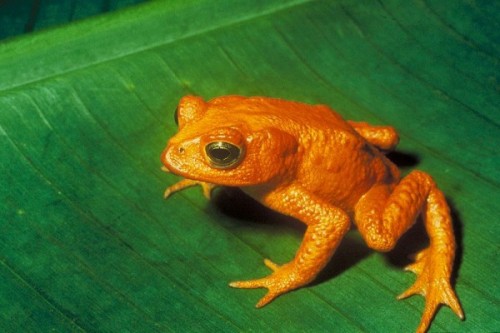
Scientific Name: Bufo periglenes

Size: <5cm in length

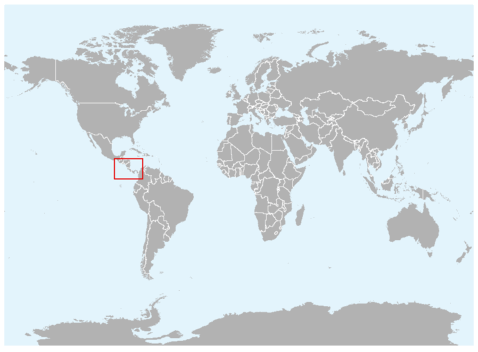
Range: The Monteverde Rainforests in Costa Rica at elevations only between 1500-1620m above sea level.

Habitat: Tropical and Subtropical Montane forests

Ecology: The Golden Toad was an endemic species to Monteverde Rainforests.  This rainforest is known as a cloud forest because it obtains most of its moisture from the clouds and not precipitation.  The toads burrow underground for most of the year except during the breading season.  The Golden Toad breeding season would begin at the beginning of the wet season; the toads would gather in large numbers at temporary pools in the forest.

Evolution: The Golden toad was discovered in 1966 and became extinct by 1989.  Due to the toads habitat requirements they were geographically isolated.  In 1988, Monteverde rainforest was warmer than normal and the temporary pools dried up before the tadpoles could mature, that led to a significant reduction in adult toad population.  Because the global temperature has continued to rise the pools that the toads had relied on for reproduction are no longer there.  This has significantly contributed to a decline in population.

The Polar Bear

No comments

General Facts

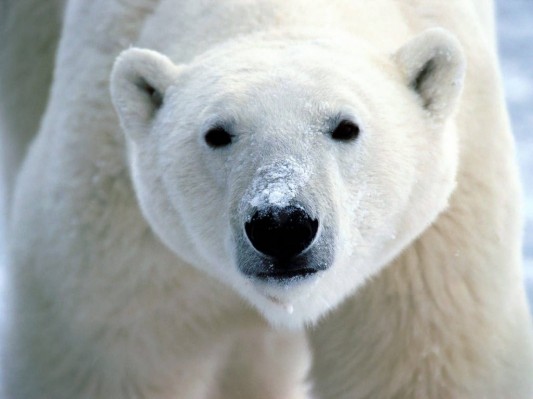
Conservational Status: Vulnerable

Scientific Name : Ursus maritimus

Weight: Males – 350-680 kg Females – 150 350 kg

Range: Arctic Circle, Beafort Sea, South Hudson Bay, East Baffin Island, West Greenland, Berents Sea, Kara Sea, Chukcki Sea, Denmark, Norway, and Russia.

Prey: Ringed Seals, Bearded Seals, Fur Seals, Walrus, Carrion,

Hunting:

Proof of bears digging through 41 cm of rafted ice to reach the seals.  Rafted ice is ice that had formed layers with air pockets between layers.  This allows seals to surface under the ice and be protected from predation by polar bears.  Bears are also starting to cannibalze other bears in response to nutrition stress.  During the ice-free season (August to October), some bears in  Hudsons Bay were found to be comsuming berries such as Bog bilberry(Vaccinium uliginosum) and Crowberry (Empertrum nigrum).  This foraging behaviour is most commonly seen in females and sub-adults

Climate Change:

The polar bear relies heavily on the sea ice to hunt and capture their prey.  Seals fish near continental shelves and bears use sea-ice to get out to the place where the seals are.  Without ice the bears cannot hunt their primary food source.   While bears are on land they fast, without the ice returning quickly enough many bears could die of starvation.  As food is harder to find more bears near communities will become “problem-animals.”

In a lecture given by Karen Hodges some of the impacts of climate change on the polar bears were outlined.  The polar bears that make up the most southern populations will be the first to feel the change in climate.  This most southern population of bears is found in James bay, Hudson bay, and  Labrador. Another factor affecting the bears is that their denning sites are shifting towards land.  These new land sites may not be as high quality as the preferred ice dens.  Mothers will have to travel farther between denning sites and feeding sites.  Also an increased amount of rain on the surface may cause the den to collapse, often killing the mother and cubs inside.

Evolution

There are approximately 20,000 – 25,000 polar bears.  The North American Polar bear population represents 70% of the total Polar bear populations.  The genetic differences between the bears are small because there is reduced geographic overlap within the wild populations.  Breeding occurs in the spring and cubs are born during late November to mid January.  Female polar bears use snow dens to give birth and raise their young therefore, having snow and ice is very important for these bears.  Polar bears are able to reproduce around age 5 or 6 and have a low fecundity rate.

A study showed that some bears have been changing in size and shape over time.  As the bears become more stressed in an effort to find food the energy requirements of a large body mass is not beneficial.   Also polar bear’s suffer from a great deal of pollution; it is thought that between the pollution and reduced food resources there seemed to be a trend in reduced size.

Hello world!

1 comment

Welcome to WordPress. This is your first post. Edit or delete it, then start blogging!